
Blog

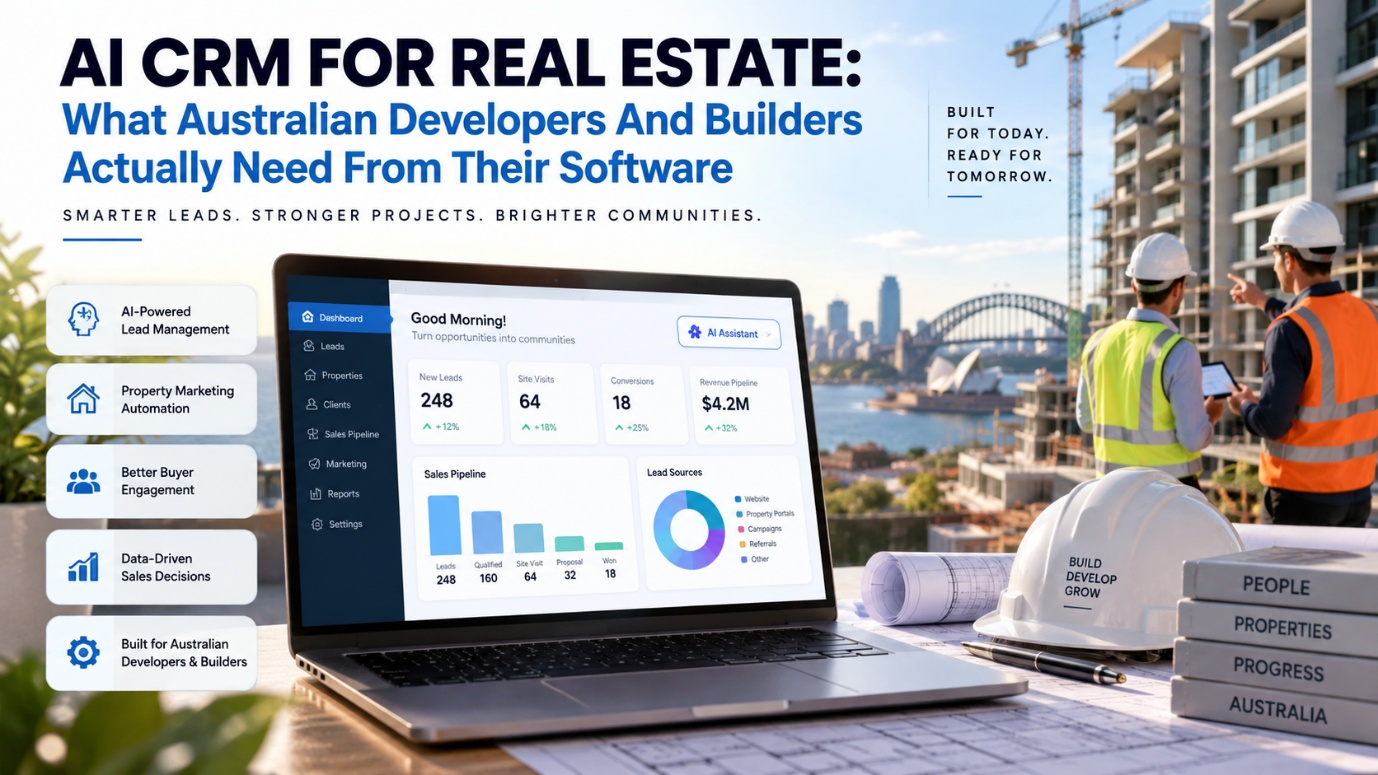
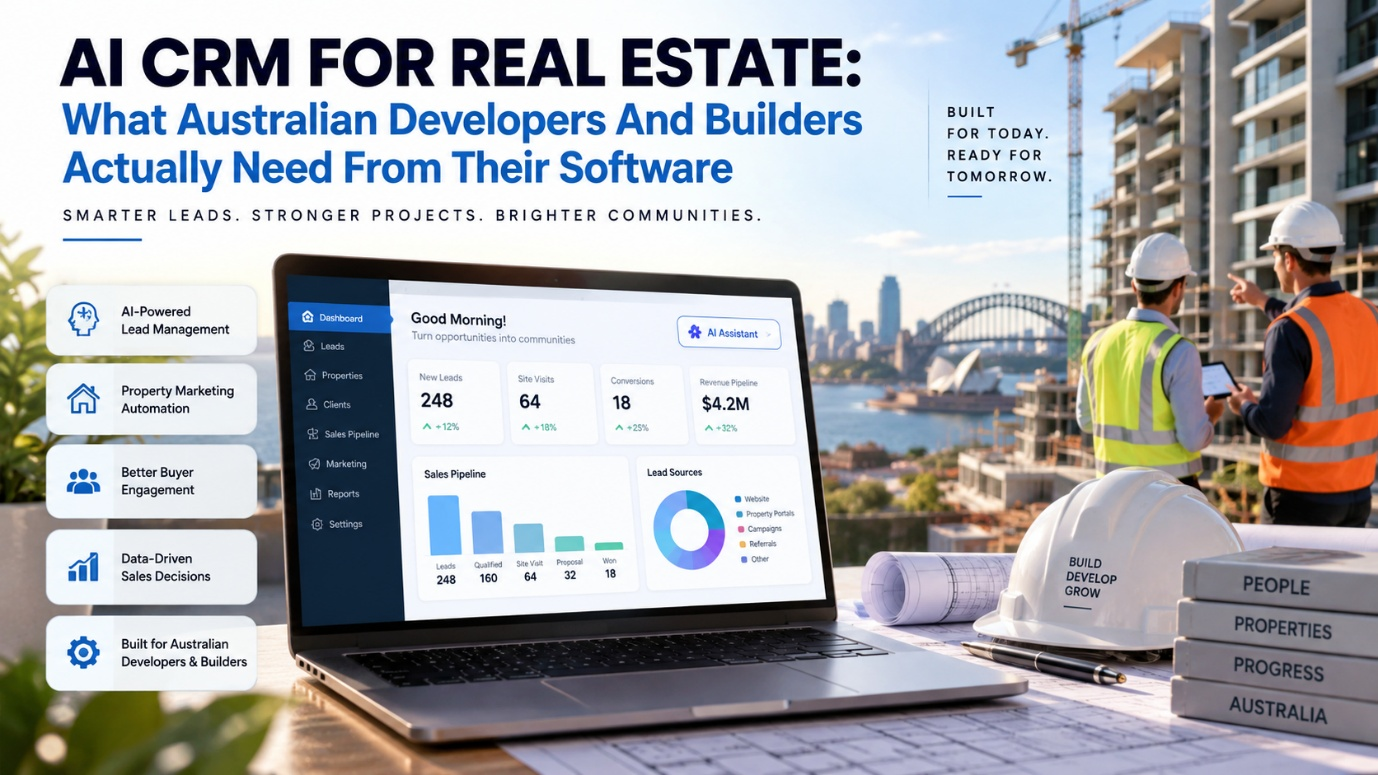
AI CRM FOR REAL ESTATE: WHAT AUSTRALIAN DEVELOPERS AND BUILDERS ACTUALLY NEED FROM THEIR SOFTWARE
Chasing buyers on three different systems, updating a spreadsheet after every site visit, and still missing follow-ups? That’s not a resourcing problem. It’s a software problem. An AI CRM for real estate brings enquiries, sales, project data, and post-settlement service into a single system, then uses AI to handle the lead scoring, follow-ups, and document work your team shouldn’t be doing manually.
That’s the bottom line. Below, we’ll unpack why a standard sales CRM falls short for CRM for real estate developers, what a proper builder CRM software needs to cover across the project lifecycle, and how an AI-powered property CRM — like Compusoft’s Buildex, built on Microsoft Dynamics 365 — is being used by developers across Australia and the wider ANZ region.
Off-The-Shelf CRMs Weren't Built For Property
Most CRM platforms are designed around a single sales funnel: lead, opportunity, close. Property development doesn’t run on one funnel. It runs on several, simultaneously, across a project that can take years from land acquisition to handover.
Think about what a mid-sized developer or builder in Sydney, Melbourne, or Brisbane is actually juggling:
- Off-the-plan enquiries from digital campaigns and display suites
- Broker-sourced leads that need separate tracking and commission handling
- Unit and lot-level inventory that shifts daily across multiple projects
- Contract exchange, cooling-off periods, and deposit tracking
- Construction milestones that buyers expect to be kept across
- Defects, maintenance, and service requests after settlement
A generic CRM has no field for a lot number, no concept of a strata title, and no way to flag which units are under a holding deposit versus exchanged. That’s why so many Australian developers end up running the business across a CRM, a spreadsheet, an inbox, and a WhatsApp or SMS thread — none of which talk to each other.
What Builder CRM Software Should Cover, Start To Finish
A CRM purpose-built for real estate and construction treats the sale as one long relationship, not a transaction that ends at exchange. Here’s what that looks like in practice.
Centralised Enquiry Management
Every lead — from the website, a portal listing, a display suite walk-in, or a broker referral — lands in one dashboard. Nothing gets left in someone’s personal inbox or forgotten after a busy open-for-inspection weekend.
Project And Unit-Level Mapping
Enquiries link directly to a specific building, tower, or lot, with live availability. Your sales team stops telling two different buyers that the same three-bedroom apartment is still on the market.
Automated Sales Workflows
Follow-up emails, sales stage progression, and contract or agreement generation happen automatically, off the back of buyer activity — not because someone remembered to action it before knocking off for the day.
Marketing And Campaign Tracking
Run SMS, email, and targeted campaigns per project or unit type, and see which one actually drove a site visit or a deposit — not just an impression count that looks good in a report nobody reads.
Post-Settlement Service Management
Agreements, payment plans, defect requests, and maintenance tickets should sit in the same system that managed the sale, ideally linked to your ERP and finance platform. Otherwise your finance team and your sales team are working off two different pictures of the same deal.
Real-Time Reporting For Leadership
Project directors and sales managers need a live read on conversion rates, campaign performance, and pipeline health — not a manually compiled report that’s already a fortnight out of date by the time it lands on the boardroom table.
Where AI Actually Earns Its Keep
Plenty of software gets labelled “AI-powered” without doing much more than sorting a list. Here’s what genuine AI looks like when it’s purpose-built for the property and construction sector.
Where AI Actually Earns Its Keep
Plenty of software gets labelled “AI-powered” without doing much more than sorting a list. Here’s what genuine AI looks like when it’s purpose-built for the property and construction sector.
AI-Driven Lead Qualification
Not every enquiry is worth the same follow-up call. Predictive scoring surfaces the buyers who are genuinely close to committing, so your sales team spends its energy where it converts — not chasing someone who downloaded a brochure out of curiosity six months back.
24/7 Virtual Assistants
A prospect browsing your project page on a Sunday night shouldn’t have to wait until Monday morning for a response. Multilingual bots handle chat, email, and phone enquiries after hours, capturing intent so a human can follow up first thing.
Smart Document Automation
Contracts, receipts, and payment schedules generated straight from system data, rather than manually drafted and cross-checked against three separate spreadsheets. Fewer errors, faster turnaround, and a buyer who isn’t waiting a week for paperwork.
Construction Progress Syncing
Buyers increasingly expect visibility into how their build is progressing. AI-driven updates sync milestones — slab down, frame complete, practical completion — straight to the customer, without your team drafting individual emails for every buyer on every project.
Purpose-Built AI Agents Across The Build
This is where an AI-powered property CRM goes beyond the sales office and into the construction side of the business:
- Site evaluation and feasibility AI agent — assesses land, cost, and compliance before capital commits to a project
- Smart concrete scheduling AI agent — automates pour schedules to reduce waste and avoid site delays
- Labour and equipment optimisation AI agent — allocates crews and machinery based on real site demand
- Facility management AI agent — manages maintenance, compliance, and energy efficiency once a project is handed over
None of this comes standard in a generic CRM. It’s what happens when the platform is built by people who understand that a developer’s obligations don’t stop once the contract’s signed.
The Cost Of Sticking With Disconnected Systems
- Leads going cold because a follow-up was two or three days late
- A unit shown as available to a broker when it was already under contract
- Buyers ringing the office repeatedly for a document that should have been generated automatically
- No clear line of sight on which campaign spend is producing site visits versus vanity clicks
- Sales staff stuck without mobile access when they’re at a display suite or offsite
Every one of those is a process gap, not a people problem — and it’s exactly what an integrated, AI-enabled CRM is built to close.
What To Check Before You Commit To One
- Real ERP integration — sales, finance, and post-settlement service need to sit in one connected system, not three tools bolted together
- Property-specific structure — lot mapping, broker tracking, and campaign management should be native functionality, not a custom workaround
- Actual AI, not a rebadged filter — lead scoring, document automation, and construction-side AI agents, not a chatbot skin over old software
- Mobile access for site and sales teams — reliable offline functionality matters more than a dashboard nobody in the field opens
- A vendor who understands ANZ property and construction conditions — state-based compliance, off-the-plan sales structures, and strata considerations aren’t edge cases here, they’re the day-to-day reality
Talk To Compusoft Advisors About Buildex
Compusoft Buildex, powered by Microsoft Dynamics 365, is built specifically for real estate, construction, and development businesses across Australia and the ANZ region — from first enquiry through to post-settlement service. With AI agents handling everything from lead qualification to concrete scheduling, it replaces the patchwork of disconnected tools with one system your whole team can actually work from.
Get in touch with the Compusoft Advisors Australia team to see how Buildex fits your projects. Contact Raj Ganatra at raj.ganatra@compusoftadvisors.com or +61 409 64 3494, or visit the Real Estate Solution page to book a walkthrough.