
Why a Local Microsoft Solutions Partner Matters for Dynamics 365 in Australia
Recent Post
-
 04 Nov 2026Microsoft Copilot for Australian Businesses: From First Workshop to a Custom AI Solution
-
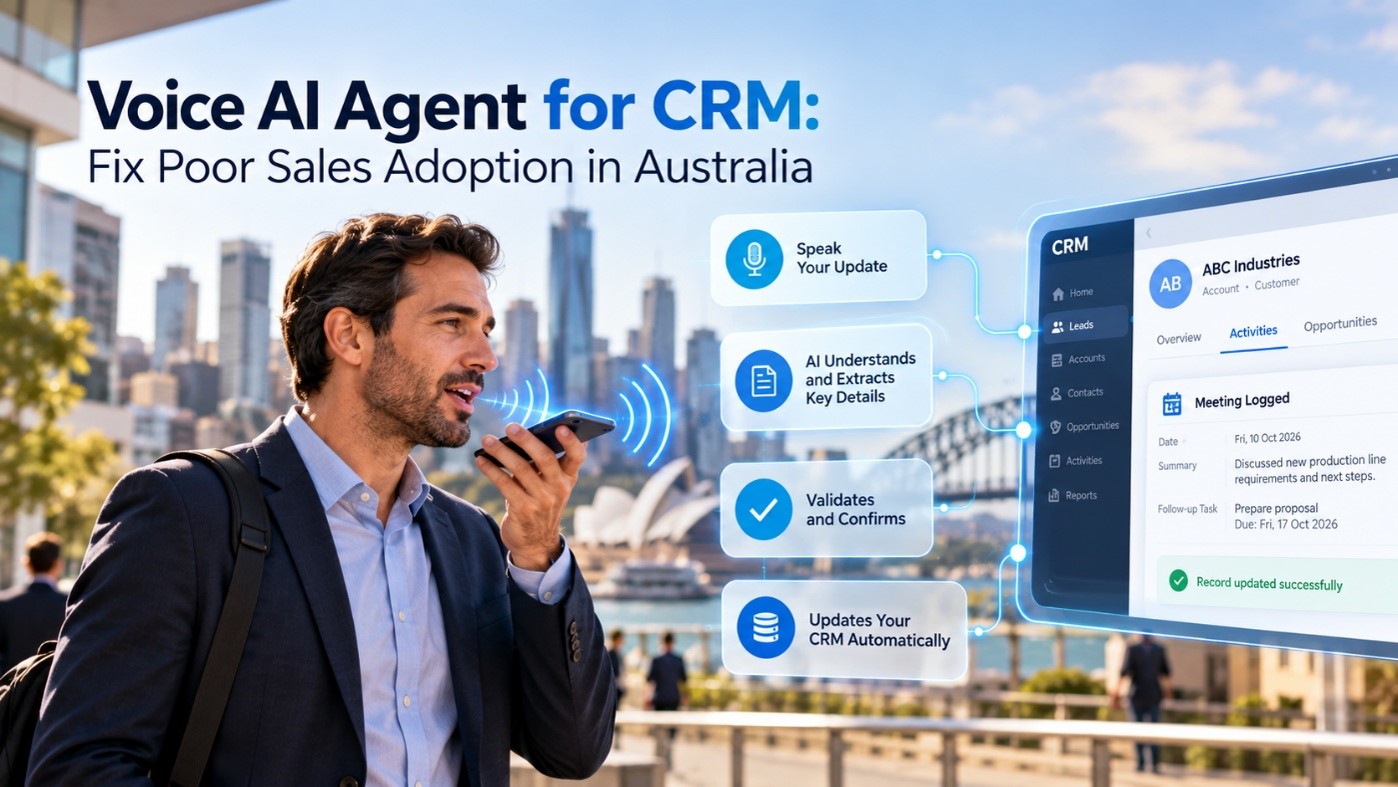 02 Nov 2026Voice AI Agent for CRM: Fix Poor Sales Adoption in Australia (Copy)
-
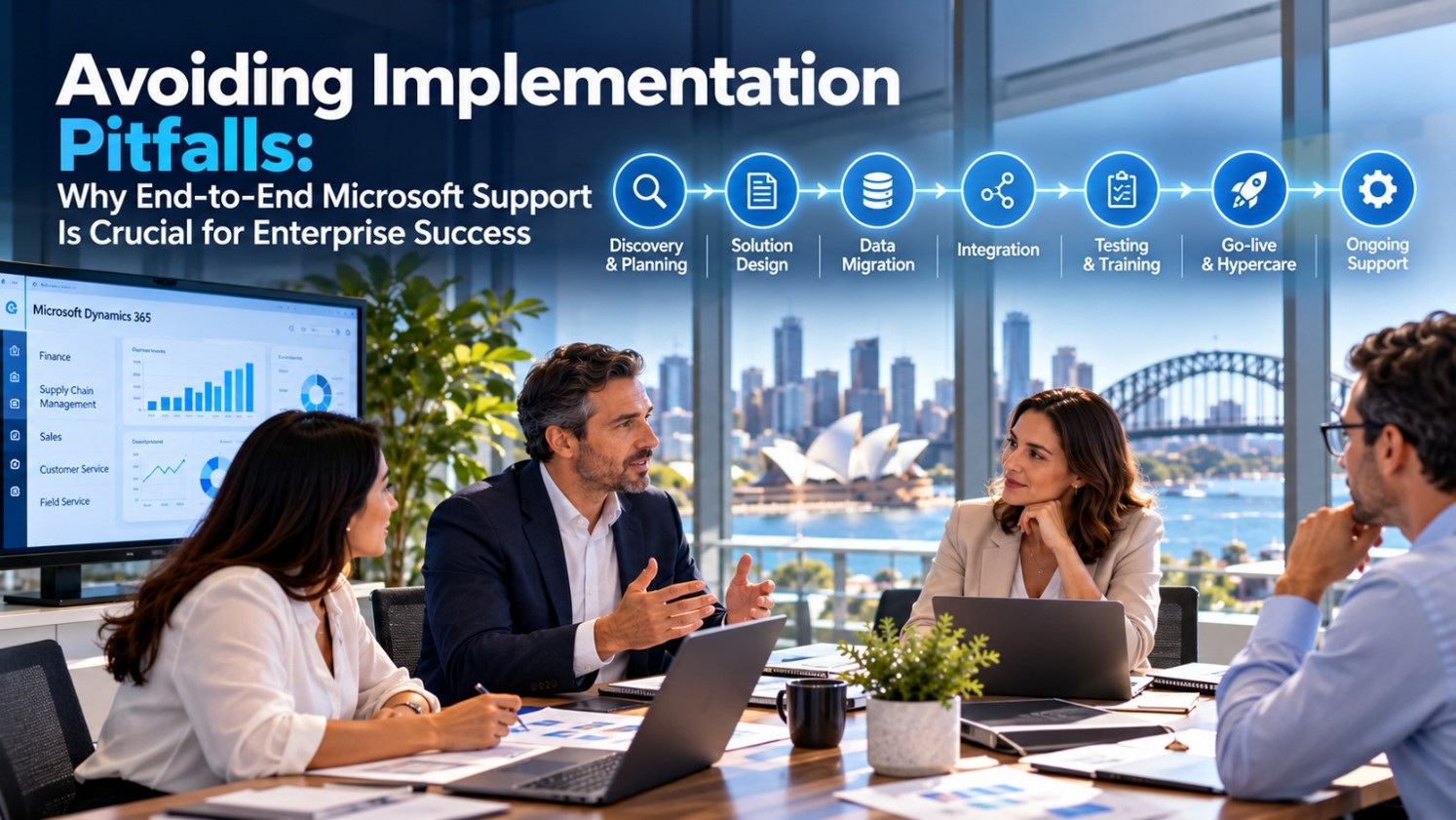 02 Nov 2026How to Choose a Reliable Microsoft Partner for Enterprise Business Apps in Australia (Copy)
-
 28 Oct 2026How to Choose a Reliable Microsoft Partner for Enterprise Business Apps in Australia
-
 15 Oct 2026Why a Local Microsoft Solutions Partner Matters for Dynamics 365 in Australia
Why a Local Microsoft Solutions Partner Matters for Dynamics 365 in Australia
A local Microsoft Solutions Partner lowers the three biggest risks in a Dynamics 365 rollout: compliance gaps, slow support and a system built around someone else’s business rules. If you’re shortlisting a Dynamics 365 partner in Australia, look for ANZ delivery experience, a Sydney presence and post-go-live support written into the contract. Everything below explains what to check and why it matters.
The Real Cost of Choosing the Wrong Dynamics 365 Partner
Dynamics 365 is a strong platform. The software rarely fails. The implementation does.
Most stalled ERP and CRM projects share the same story. The partner never understood how the business bills, reports or hands work between teams. Workflows get forced into default templates. Users fall back to spreadsheets within three months. Licences keep renewing for a system nobody trusts.
A local partner won’t fix a bad plan on its own. But proximity makes the plan better, because the people designing your system already know your market.
What "Local" Actually Means in a Dynamics 365 Project
Local doesn’t mean a postcode on a contact page. It means the team has delivered in your regulatory and commercial environment, and it answers the phone in your working day.
Australian compliance is built in, not bolted on
Australian enterprises answer to the Privacy Act 1988 and the Australian Privacy Principles. Financial services firms face APRA standards on top. Your finance team lives with GST, BAS and Single Touch Payroll. Your security team will ask where customer data sits, and many will want it hosted in Australian Azure regions.
A partner who has handled these requirements before configures them in week two. A partner meeting them for the first time discovers them at user acceptance testing.
Time zones affect your go-live
Cutover weekends are tense. A data migration issue at 11 pm on a Saturday needs someone who is awake, accountable and reachable. Offshore-only teams often work a full business day behind or ahead of you.
Compusoft Advisors runs an Australian office in Sydney alongside a delivery footprint across India, Singapore, the U.K., the U.S. and the UAE. That mix gives you local contact during your hours and global engineering depth behind it.
Your processes aren't a global template
Real estate and construction firms in Australia manage project milestones, progress claims and retentions in ways a US-centric template ignores. Manufacturers balance local and imported supply chains. Logistics operators deal with long distances and tight windows.
Compusoft Advisors delivers Dynamics 365 for manufacturing, logistics, finance, retail, real estate and construction, education, aerospace and IT/ITES. Industry fit shapes the design from day one.
Local vs Offshore-Only Partner: A Side-by-Side View
| Factor | Local Microsoft Solutions Partner | Offshore-Only Vendor |
|---|---|---|
| Regulatory knowledge | Handles Privacy Act, APRA, GST and BAS requirements as routine work | Learns Australian rules during your project |
| Support hours | Overlaps your business day | Often a half or full day apart |
| Workshops and training | On-site or same-day remote sessions | Scheduled around time-zone gaps |
| Licensing guidance | Advises on Australian licensing tiers and compliance | Generic global licensing advice |
| Industry templates | Tuned to ANZ workflows | Standardised for global use |
| Post-go-live accountability | Named local contact | Ticket queue |
| Escalation path | Face-to-face if needed | Email and scheduled calls |
The right-hand column isn’t always wrong. Some offshore teams are excellent. But for a regulated, multi-site Australian enterprise, the left column removes friction you’d otherwise pay for later.
How Compusoft Advisors Runs a Dynamics 365 Implementation
Compusoft Advisors is a Microsoft Solutions Partner with more than 25 years of delivery experience. The company was founded in 1997, and it covers Dynamics 365 ERP and CRM, Microsoft 365, Power Platform, Azure and Microsoft Copilot.
The implementation path is structured and visible:
- Discovery and consulting. The team maps your current processes before touching configuration.
- Workflow customisation. Dynamics 365 is shaped to your approvals, reporting lines and industry rules.
- Data migration. Legacy records move across with validation, so users trust what they see on day one.
- End-user training. People learn the system in the context of their own jobs.
- Post-sales support. Health checks, performance tuning, updates and troubleshooting continue after go-live.
That last step is where many projects quietly die. A system without active support drifts. Reports break, new staff skip training and workarounds multiply. Treat post-go-live support as part of the build, not an optional extra.
Licensing: Where Local Knowledge Saves Real Money
Microsoft licensing confuses even experienced IT leaders. Wrong tier allocation means you either overpay for features nobody uses or run into compliance exposure at audit time.
A local partner reviews your headcount, role types and usage patterns, then maps them to the right Dynamics 365 and Microsoft 365 licences. Compusoft Advisors guides clients through licensing requirements and compliance specific to the ANZ region. That advice often pays for itself in the first renewal cycle.
Copilot and AI: Don't Bolt It On Later
Australian enterprises increasingly expect AI inside their ERP and CRM from the start. Microsoft Copilot works across Word, Excel, Teams and Outlook, and it pulls from the data your Dynamics 365 system holds. Messy data produces weak answers.
Compusoft Advisors runs Copilot and Copilot Studio workshops, and it builds custom AI agents for specific jobs:
- Document analysis
- Meeting assistance
- HR management
- IT service management
- Database queries
Planning for these during implementation means your data model, security roles and governance support AI use from day one. Retrofitting costs more.
Questions to Ask Any Dynamics 365 Partner Before You Sign
Put these on the table in your first meeting. The answers tell you more than a polished proposal.
- Which Australian projects have you delivered in my industry? Ask for specifics, not logos.
- Where will my data be hosted, and who signs off on that decision? Get a named person.
- Who answers the phone at 8 am Sydney time on go-live day? Get a name and a number.
- How do you handle GST, BAS and payroll integration? Listen for detail, not reassurance.
- What does support cost after go-live, and what does it cover? Get it in writing.
- How do you train users who resist change? A good partner has a real answer.
- Who owns licensing reviews each year? If nobody does, you will overspend.
A partner who answers these without hedging has probably done the work before.