
Why a Local Microsoft Solutions Partner Matters for Dynamics 365 in Australia
Recent Post
-
 04 Nov 2026Microsoft Copilot for Australian Businesses: From First Workshop to a Custom AI Solution
-
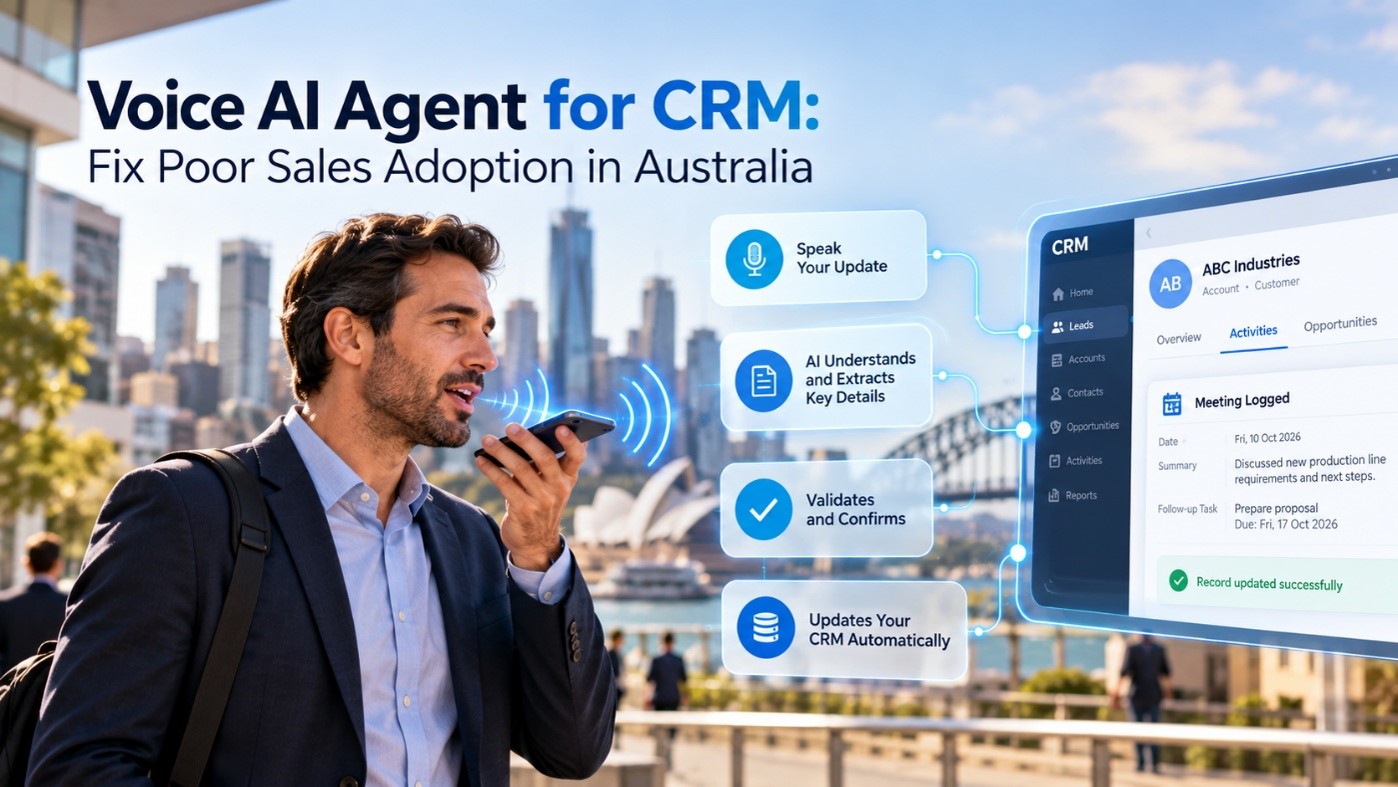 02 Nov 2026Voice AI Agent for CRM: Fix Poor Sales Adoption in Australia (Copy)
-
 02 Nov 2026How to Choose a Reliable Microsoft Partner for Enterprise Business Apps in Australia (Copy)
-
 28 Oct 2026How to Choose a Reliable Microsoft Partner for Enterprise Business Apps in Australia
-
 15 Oct 2026Why a Local Microsoft Solutions Partner Matters for Dynamics 365 in Australia
How to Choose a Reliable Microsoft Partner for Enterprise Business Apps in Australia
For Australian CIOs, CTOs, IT Directors, and business leaders, digital transformation is no longer a distant strategic goal—it is an operational necessity. As organizations across Sydney, Melbourne, Brisbane, Perth, Adelaide, and regional hubs scale their operations, off-the-shelf software solutions quickly hit their hard limits. Enterprises require robust, scalable, and secure ecosystems that seamlessly integrate customer relationship management, enterprise resource planning, supply chain management, and advanced cloud infrastructure. This is where the Microsoft technology stack—spanning Dynamics 365, the Power Platform, and Microsoft Azure—becomes the central nerve center of modern enterprise architecture.
However, deploying enterprise-grade business applications is rarely a straightforward plug-and-play exercise. The success or failure of your digital transformation initiative hinges almost entirely on finding and securing a reliable Microsoft partner for enterprise business apps who possesses deep technical mastery, industry-specific acumen, and a nuanced understanding of the Australian business landscape.
Navigating the vendor selection process can feel overwhelming, given the sheer number of certified consultants, systems integrators, and boutique digital agencies operating across the ANZ region. To help enterprise leaders cut through the noise, vendor marketing pitches, and technical jargon, this comprehensive guide establishes a transparent, rigorous evaluation framework designed to help you identify the ideal partner for your long-term technological and commercial goals.
1. Understanding the Australian Enterprise Context and Regulatory Compliance
Before evaluating potential partners, it is vital to acknowledge what sets the Australian business environment apart from North American or European markets. Regulatory compliance, data sovereignty, and robust security standards are paramount concerns for Australian boards and executives. Whether your enterprise operates in financial services, healthcare, retail, logistics, manufacturing, or real estate, you must adhere to stringent local frameworks, including the Privacy Act 1988, Australian Privacy Principles (APPs), and specific APRA (Australian Prudential Regulation Authority) guidelines for banking, superannuation, and insurance institutions.
A top-tier Microsoft partner does not merely implement generic software modules; they architect custom solutions tailored specifically to Australian data residency requirements and compliance mandates. They ensure that your cloud deployments leverage Microsoft’s local datacenter regions (such as Australia Central in Canberra and Australia East in New South Wales), guaranteeing ultra-low latency, high availability, and strict adherence to local regulatory frameworks. When interviewing prospective partners, their immediate fluency in Australian compliance standards and sovereign cloud capabilities should serve as your first major litmus test.
A top-tier Microsoft partner does not merely implement generic software modules; they architect custom solutions tailored specifically to Australian data residency requirements and compliance mandates. They ensure that your cloud deployments leverage Microsoft’s local datacenter regions (such as Australia Central in Canberra and Australia East in New South Wales), guaranteeing ultra-low latency, high availability, and strict adherence to local regulatory frameworks. When interviewing prospective partners, their immediate fluency in Australian compliance standards and sovereign cloud capabilities should serve as your first major litmus test.
2. Demystifying Microsoft Partner Designations in the Modern Era
The Microsoft Partner ecosystem has undergone a massive transformation in recent years. Gone are the days of generic silver and gold competencies. Today, Microsoft utilizes a rigorous Solutions Partner designation framework based on validated performance, continuous skilling, and verified customer success across specific strategic solution areas:
- Data & AI (Azure): Crucial for enterprises looking to harness machine learning models, predictive analytics, enterprise data estates, and AI-driven automation via Azure OpenAI and Copilot integrations.
- Digital & App Innovation (Azure): Essential for custom application development, containerization, microservices architecture, and cloud-native scalability.
- Infrastructure (Azure): Vital for seamless cloud migration, hybrid server management, disaster recovery, and enterprise-grade security hardening.
- Business Applications: The cornerstone for Dynamics 365 (Finance, Supply Chain Management, Sales, Customer Service, Field Service) and Power Platform implementations.
3. A Comprehensive 5-Step Evaluation Framework for CIOs and CTOs
To operationalize your search and remove subjectivity from the vendor selection process, apply this structured 5-step evaluation framework during your RFP (Request for Proposal) and interview phases:
Step 1: Assess Deep Technical Expertise and Enterprise Architecture Capability
Enterprise applications never exist in a vacuum. Your CRM must communicate seamlessly with your ERP, which in turn must integrate with legacy SQL databases, third-party logistics APIs, and proprietary custom software. Evaluate the partner’s enterprise solution architects—not just their account managers or sales representatives. Can they design complex, hybrid, or multi-cloud integration pipelines? Do they possess deep expertise in custom extensions via the Power Platform (Power Apps, Power Automate, Power Virtual Agents, Power BI) without breaking core system upgradability and future-proofing your IT investment?
Step 2: Evaluate Industry-Specific Deployment Experience
Generic implementation templates rarely survive contact with industry-specific operational realities. A partner that excels in retail supply chain optimization may not understand the complex compliance nuances of medical device manufacturing or the intricate project-accounting needs of engineering consultancies. Look for proven vertical experience within the Australian market. Ask prospective partners for detailed case studies and direct client references from organizations operating at a similar scale, user volume, and industry vertical.
Step 3: Scrutinize Change Management and User Adoption Methodologies
The most sophisticated ERP or CRM deployment will inevitably fail if your internal staff and departmental leads reject it. User adoption friction is the silent killer of enterprise digital transformation projects. A reliable partner understands that technology implementation is only 40% code and 60% people, culture, and process alignment. Inquire about their formal change management frameworks, user adoption metrics, tailored training curricula, role-based onboarding workshops, and internal digital champion networks designed to drive sustained enthusiasm and utilization across your workforce.
Step 4: Examine Post-Implementation Support and Managed Services SLAs
Go-live day is never the finish line; it is merely the starting line of your enterprise software’s operational lifecycle. Complex cloud business applications require continuous monitoring, performance tuning, security patching, user permission governance, and feature optimization as Microsoft rolls out biannual release waves. Review the partner’s Service Level Agreements (SLAs). Do they offer dedicated managed services, proactive health checks, and local Australian support desks, or will your urgent support tickets disappear into an offshore ticketing black box across different time zones?
Step 5: Evaluate Cultural Alignment and Strategic Vision
Enterprise technology partnerships are long-term strategic engagements spanning years, not weeks. You need a partner who acts as a trusted strategic advisor rather than a transactional order-taker. Do they challenge your internal assumptions constructively? Do they understand your five-year business growth roadmap and international expansion plans? Cultural fit, transparent communication, executive sponsorship, and shared core values are vital indicators of whether a partnership will successfully weather inevitable project complexities.
4. Avoiding Common Enterprise Implementation Pitfalls
Even with a highly qualified partner, enterprise software implementation projects can derail if common strategic traps are ignored. Awareness of these pitfalls will help your project steering committee maintain control throughout the implementation lifecycle:
- Scope Creep and Inadequate Discovery: Rushing through the initial discovery and requirements-gathering phase inevitably leads to inaccurate scoping, delayed project timelines, and painful budget overruns. Insist on a thorough, paid discovery and architectural blueprinting phase before committing to a monolithic implementation contract.
- Neglecting Data Hygiene and Master Data Management: Migrating messy, siloed legacy data into a pristine new Microsoft Dynamics 365 environment guarantees immediate operational friction and user frustration (“garbage in, garbage out”). Make data cleansing, deduplication, governance rules, and migration mapping a core pillar of your pre-implementation checklist.
- Treating IT as an Isolated Silo: Successful enterprise transformations require active sponsorship, active participation, and cross-functional engagement from executive leadership, finance, operations, supply chain, and frontline users. Keep governance steering committees active and accountable throughout the entire journey.