
Why a Local Microsoft Solutions Partner Matters for Dynamics 365 in Australia
Recent Post
-
 04 Nov 2026Microsoft Copilot for Australian Businesses: From First Workshop to a Custom AI Solution
-
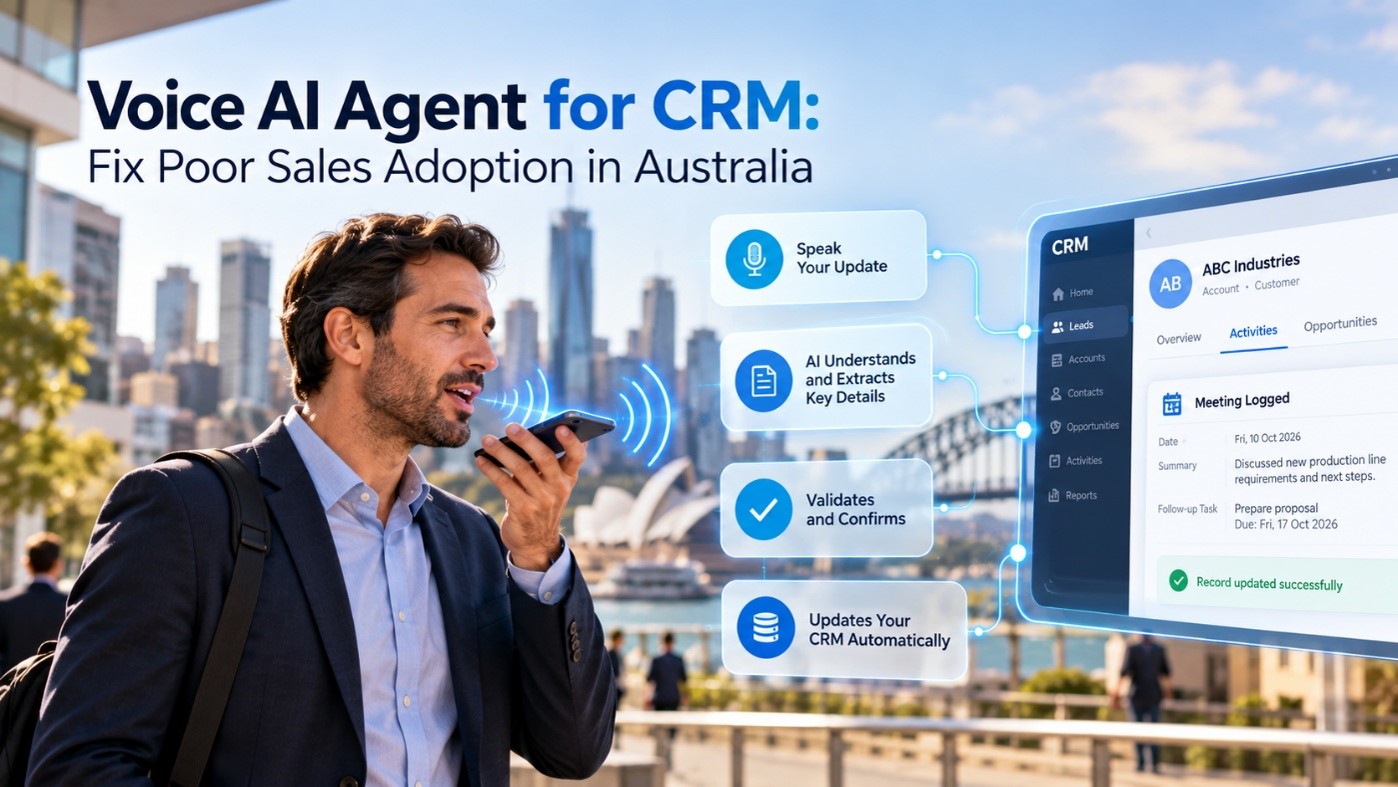 02 Nov 2026Voice AI Agent for CRM: Fix Poor Sales Adoption in Australia (Copy)
-
 02 Nov 2026How to Choose a Reliable Microsoft Partner for Enterprise Business Apps in Australia (Copy)
-
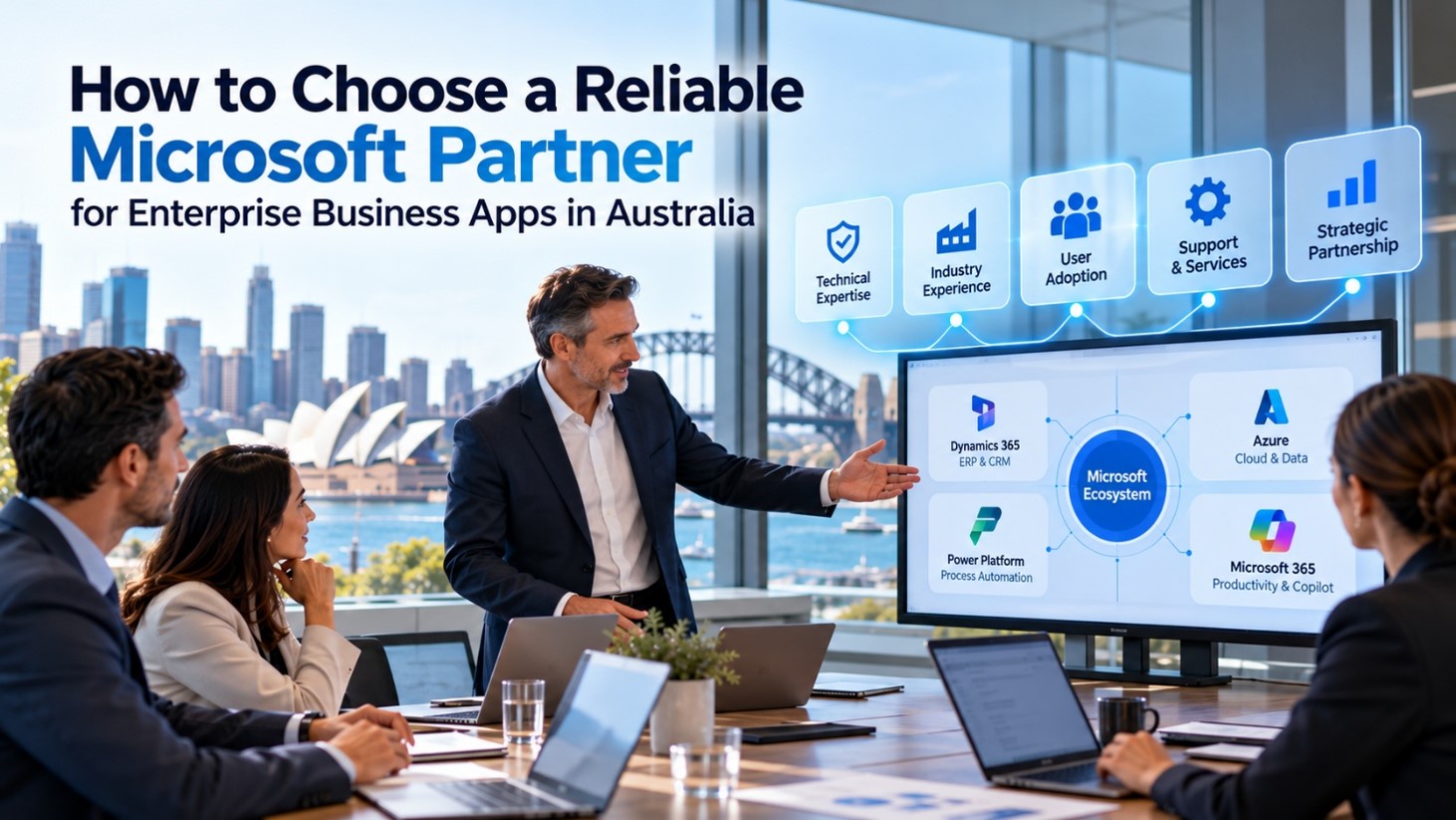 28 Oct 2026How to Choose a Reliable Microsoft Partner for Enterprise Business Apps in Australia
-
 15 Oct 2026Why a Local Microsoft Solutions Partner Matters for Dynamics 365 in Australia
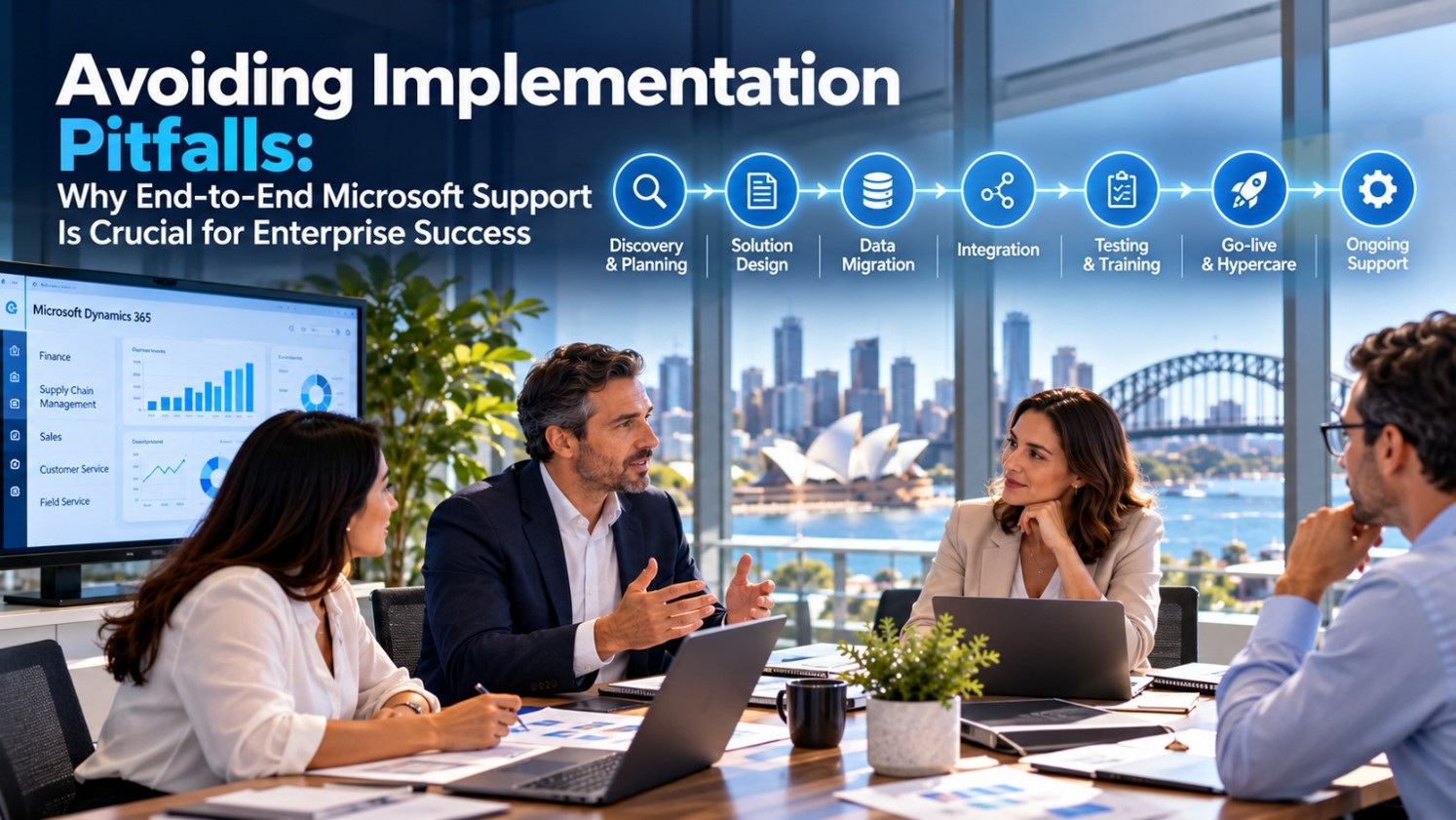
Avoiding Implementation Pitfalls: Why End-to-End Microsoft Support Is Crucial for Enterprise Success
ERP and CRM projects rarely fail because of the software. They fail in the gaps: a rushed discovery phase, a data migration nobody owned, a consultant who vanished after go-live. The fix is a single, accountable Microsoft partner for enterprise business appswho stays with you from scoping through post-launch support. One team. One plan. Far fewer surprises on the Monday after cutover.
Here is where projects go wrong, and how end-to-end support stops it.
Where ERP and CRM Implementations Actually Break
Operations managers usually see the same five failures, whether the platform is Dynamics 365 Business Central, Finance and Supply Chain Management, or Dynamics 365 Sales.
1. Scope that drifts
It starts small. “Can we also add a custom approval flow for the Perth warehouse?” Then another request arrives, and another. Six weeks later the budget is stretched and the original go-live date is fiction.
Drift happens when nobody holds the line on requirements. A partner with full project ownership writes the scope down, prices each change, and shows you the trade-off before you agree to it.
2. Dirty data moved into a clean system
Your legacy system holds fifteen years of duplicate customers, half-retired SKUs and vendor records with three different ABNs. Load that into a new platform and you have built an expensive new place to find the same old errors.
Migration is not a weekend task. It needs profiling, cleansing, mapping, trial loads and sign-off from the people who actually use the data. Skip any of those and finance will find the mismatch at month-end close.
3. Customisation that outgrows the platform
Heavy customisation feels like control. In practice it makes every Microsoft update a negotiation. Microsoft ships regular release waves, and a pile of bespoke code can break with them.
Good partners fit your process to the platform first. They customise only where the business case is clear, and they build extensions the way Microsoft intends, so updates stay routine.
4. Training treated as an afterthought A two-hour demo the week before go-live is not training. Your warehouse team needs to practise receiving stock in a test environment. Your sales reps need to log a real opportunity before they are asked to do it with a live client on the phone.
When users do not trust the new system, they go back to spreadsheets. Adoption collapses quietly, and the ROI goes with it.
5. Handoffs between vendors This is the most expensive failure. One firm licenses the software, another configures it, a third handles integrations, and your internal team plays referee. When something breaks, each party points at the others.
What End-to-End Microsoft Support Looks Like
End-to-end does not mean “they do everything and you stay out of it.” It means one partner stays accountable at every stage, with your team involved at each decision point.
- Discovery and scoping:Process mapping with the people who run the work, not just the executives who sponsor it.
- Solution design: A documented fit-gap analysis showing what the platform does out of the box and what genuinely needs extending.
- Data migration:Cleansing, mapping and at least two trial loads before anything touches production.
- Integration: Connecting your new apps to Microsoft 365, Power BI, Power Platform and the third-party tools you already run.
- Testing and training:User acceptance testing with real scenarios, plus role-based training in a sandbox.
- Go-live and hypercare: Named support staff on call during the first weeks, when issues surface fastest.
- Ongoing supportRelease-wave testing, user requests and optimisation after the project team has moved on.
The Risks Specific to Australian Businesses
A generic global rollout plan misses details that matter here.
Compliance and reporting. GST, BAS lodgement and Single Touch Payroll requirements need to work from day one. A finance module that cannot produce a compliant BAS is not finished, no matter what the project plan says.
Data residency and privacy. Many Australian organisations must show where customer data lives and how it is handled under the Privacy Act. Your partner should be able to explain Azure region choices and access controls in plain terms before you sign.
Security posture. If you work with government or regulated industries, alignment with the ACSC’s Essential Eight is often a procurement requirement. Retrofitting it after go-live costs far more than designing it in.
Time zones and support hours. An overseas helpdesk that wakes up at 2 am your time is a poor fit when your warehouse in Brisbane stops scanning at 7 am. Local support during Australian business hours is a practical risk control.
How End-to-End Support Cuts Risk in Practice
Consider a mid-sized distributor moving from an ageing on-premise ERP to Dynamics 365. With fragmented vendors, the migration team loads customer data, the integration team builds a connection to the e-commerce store, and nobody notices that the two use different customer ID formats. Orders fail on day one.
With one accountable partner, that mismatch surfaces in the design workshop, because the same architect sees both workstreams. It becomes a two-line mapping rule instead of a crisis. That is the real value. Fewer seams between teams means fewer places for problems to hide.
With one accountable partner, that mismatch surfaces in the design workshop, because the same architect sees both workstreams. It becomes a two-line mapping rule instead of a crisis. That is the real value. Fewer seams between teams means fewer places for problems to hide.
Questions to Put to Any Partner Before You Sign
You do not need to wait for a failed go-live to act. Watch for these:
- Requirements document that nobody on the operations side has read
- Test environments that contain made-up data instead of cleansed real data
- Training scheduled after the go-live date is locked
- Your team spending more time coordinating vendors than reviewing the work
- A budget that has only moved in one direction
Start With a Conversation, Not a Contract
If you are planning a migration, or you are partway through one that feels shaky, talk to a team that owns the outcome from first workshop to long after launch.
Book a free implementation risk review with Compusoft Advisors and bring your timeline, your current system and your biggest worry. You will leave with a clear view of where your project is exposed and what to fix first.
Book a free implementation risk review with Compusoft Advisors and bring your timeline, your current system and your biggest worry. You will leave with a clear view of where your project is exposed and what to fix first.